President Tinubu’s Re-election Boat Has Set Sail In Abia State.
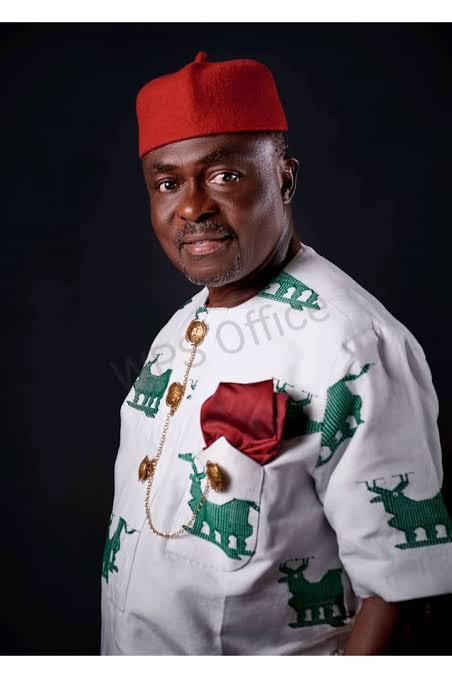
By Sir Don Ubani; KSC, JP.
07-11-2026.
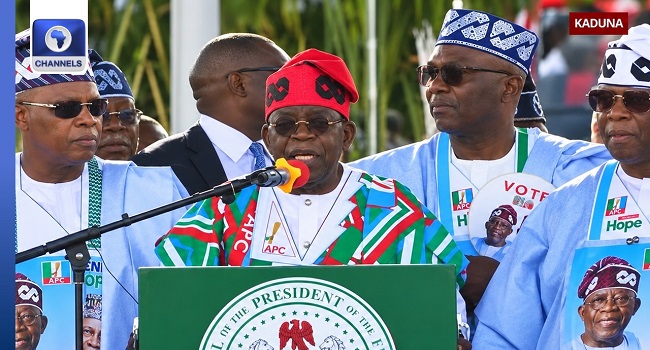
In the current democratic dispensation, Thursday (Orie) 5th November, 2026, has been recorded as a remarkable date within the length and breadth of Abia political development. That day recorded, with pump and pageantry, an unprecedented successful inauguration of Abia APC Presidential Campaign Council of President Bola Ahmed Tinubu, GCFR, at International Conference Centre, Umuahia, built by Governor T A Orji, and lavishly furnished by his successor, Ambassador Okezie Victor Ikpeazu, Ph.D.
Abia is one of the five South Eastern States of Nigeria. The Region has a record of having produced very eminent Politicians and Statesmen such as; Dr Nnamdi Azikiwe who was a prominent architect in the struggle for Nigeria’s independence, and first President of Nigeria, though constitutionally ceremonial, Dr M. I. Okpara who, as Premier of Eastern Region, through sheer pragmatism, was said to have developed the fastest-growing economy in the world before the takeover of governance in Nigeria by the Military in January 1966, Dr Akanu Ibiam who was Governor of Eastern Region of Nigeria, Dr Jaja Anucha Wachuku who was the first Speaker of Nigeria’s House of Representatives, and first Nigerian Permanent Representative at the United Nations, and the first Military Head of State of Nigeria, Major-General Johnson Thomas Umunnakwe Aguiyi-Ironsi.
Before the Nigerian Civil War, also known as Nigeria/Biafra war, the Igbo in Nigeria were conspicuous in almost every sector of the country’s economy, including the Military, Police, Judiciary, Federal Civil Service, Foreign Affairs, Railway Co-operation, Education, Agriculture, and the Private Sector.
Record has it that the first Nigerian Billonaire was an Igbo man, Sir Louis Philip Odumegwu Ojukwu, whose Rolls Royce Silver Wraith, the British Colonial Government in Nigeria borrowed when Queen Elizabeth 11 visited Nigeria in 1956, including his driver to chauffeur Her Imperial Majesty around.
The Igbo were in their peak before the Major Patrick Chukwuma Kaduna Nzeogwu-led military coup of January 15, 1966. The first indigenous autonomous University in Nigeria, University of Nigeria, Nsukka, UNN, was built by the Government of Eastern Nigeria in 1956, with Dr Nnamdi Azikiwe as Premier. Knowing the strategic importance of banking in building and sustaining a vibrant economy, the Igbo, through the Government of Eastern Region, established two viable banks, African Continental Bank, ACB, and Co-operative And Commerce Bank, CCB.
However, the Civil war became the albatross of the Igbo in Nigeria. Things really fell apart, and the centre could no longer hold. At the end of the war in January 1970, the Igbo were compelled to start life afresh with a paltry sum of Twenty Nigerian Pounds. That the Igbo were able to survive and also rise economically astronomically in Nigeria from such a frustrating situation is best left for history.
Despite Igbo commercial, economic and industrial astuteness and wizardry, a gap still exists in the overall standing of the Igbo in Nigeria, and that is in the area of Politics and Power. Yes, it is true that the Igbo were able to produce Nigeria’s Vice President in 1979, in the person of Dr Alexander Ifeanyichukwu Ekwueme, only seven years after the civil war, that is, unfortunately, the highest and best they have attained since the Second Republic, 1979-2026.
The Igbo, under Presidents Olusegun Obasanjo, 1979-2007, and Goodluck Ebele Jonathan, 2010-2015, appeared to have been given a fair sense of belonging in the Nigerian State. But they were not that lucky under the regime of late President Muhammadu Buhari, 2015-2023. In 2015, the People of South East, had deliberately given the mass of their support for the re-election of President Jonathan, remarkably against Buhari. Unfortunately for them, Buhari, who had what could be described as a cult-like followership in the North, especially in the core moslem North, won the Presidency in 2015, with the support of the South West, spearheaded by Bola AhmedTinubu.
Without any iota of diplomacy, tact, finesse, or pretense, he openly told the People of South East that since they gave him only five percent (5%) of their votes, they should not expect his Government’s development policy for them to exceed 5%. Buhari was not mistaken in either his pronouncement nor the attendant execution. He described the South East Region as ‘a mere dot on Nigeria’s socio-political and economic map. He made sure no person from the South East was in Nigeria’s National Security Council. Buhari, who was severally alleged to have overthrown the democratically elected Government of President Shehu Shagari on 31st December, 1983 because of his suspicion that an Igbo Man, Dr Alexander Ifeanyichukwu Ekwueme, as a very loyal and competent Vice President, could succeed President Shagari in 1986, unleashed horrendous military expeditions on the youths of South East who were agitating against the Government’s insensitivity to the plight of their people on November 27, 2016, and September 15, 2017. It was disastrously deadly. Apart from the period of the Nigerian civil war, May 29, 2015 to May 29 2023 was the worst in the social, political and economic existence of the Igbo.
In 2023, there were three major Presidential Candidates. While Senator Bola Ahmed Tinubu was the candidate of All Progressives Congress, APC, though badly conspired against even by the top echelon of his own Party, including abrupt changing of the currency, former Vice President Atiku Abubakar was the Candidate of Peoples Democratic Party, PDP, and an illustrious son of the South East and former Governor of Anambra State, Mr Peter Obi, was the Candidate of Labour Party, LP.
As the results of 2023 Presidential Election in the South East showed, Peter Obi scored One Million, Nine Hundred And Fifty-two Thousand, Nine Hundred And Ninety-eight votes, being 87.78%, Bola Ahmed Tinubu garnered One Hundred And Twenty-seven Thousand, Three Hundred And Seventy, amounting to 5.72%, while Atiku Abubakar had Ninety Thousand, Nine Hundred And Sixty-eight votes, representing 4.09%.
One would ordinarily have thought that with Tinubu’s near rejection by the South East electorate in 2023, he could have treated the People of South East in the same way that his predecessor, President Buhari, had regarded the region but being a cosmopolitan personality, he appreciated the simple truth that it could not have been easy for the people of South East to have rejected their own son who was on the ballot paper.
Inspite of what happened in 2023, President Tinubu, for purposes of inclusiveness, national integration and cohesion, appointed an indigene of South East Region, Air Marshall Sunday Kelvin Aneke, as Chief of Air Staff, CAS, and, therefore, a Member of National Security Council. This means, unlike during the Buhari Administration, that the Igbo are now represented at the highest level where the most sensitive security matters are discussed in Nigeria. For the first time in the annals of Nigeria’s history, a cerebral indigene of South East and former Governor of Ebonyi State, Engr Senator Dave Umahi, was appointed Nigeria’s Honourable Minister of Works. That appointment has, in an unprecedented way, impacted very seriously on the overall economy, welfare and growth of the People of the Region due to improvements on road infrastructure, including renovations on Niger Bridge.
In the same vein, the President’s mutual relationship with the Legislature must have contributed to the emergence of a trust worthy son of the South East, Rt Hon Benjamin Okezie Kalu, CFR, Ph.D, being elected the Deputy Speaker of the 10th House of Representatives. This is another position of influence in the APC Federal Government of PresidentTinubu.
At the end of the Nigerian civil war on January 15, 1970, the Federal Military Government of Nigeria, led by General Yakubu Gowon, came up with a 3-R pronouncement;
(1) Reconciliation,
(2) Rehabilitation, and
(3) Reconstruction.
Of all the 3 Rs, nothing was done about Reconstruction. Hence, road infrastructure in the South East experienced serious challenges. The poor state of roads in the region became detrimental to the economy and welfare of the people of the Region.
In order to address this disadvantageous situation, President Tinubu, through the untiring effort and initiative of Rt Hon Benjamin Kalu, created an Interventionist Agency, South East Development Commission, SEDC, for a radical rapid development of the Region. The Commission, under the dynamic chairmanship of a renowned Lawyer, and former Minister of Labour and Productivity, Dr Emeka Ngozicheneke Wogu, CON, Esq, has, since its inauguration, rolled out, at least, three major regional infrastructural programmes;
(1) $100 Million Joint Venture 400-Kilometre South-East Gas Distribution Pipeline from Gas Reserves in Imo State to Industrial Hubs at Aba, Onitsha, Enugu, and Abakiliki.
(2) South-East Agro Development Programme, commenced with the flag off of a 200-Hectare Integrated Model Farm at Nomeh Unateze in Nsukka-East Local Government Area of Enugu State. The project integrates; Diary, Poultry, Fisheries, Mechanization, Training to support Local Farmers through Out-Grower networks.
(3) N500 Billion Regional Infrastructure Framework designed to cordinate transport network, housing, power, and Industrial Parks, through the South East Investment Company.
(4) South-East Venture Capital Programme, an initiative that provides Equity Investments and Support for regional startups and entrepreneurs across the five States of South East.
Apart from what President Tinubu has done for the good people of South East, his signature imprints are also evident on many national sectors. To start with, that he was prepared for governance right from the first day of his Administration is not in doubt. The unprecedented radical reforms he initiated;
(1) Removal of Fuel Subsidy,
(2) Floating of the Naira, and
(3) Tax Reform went ahead to portray him as a Leader that had his vision on governance clearly spelt out.
His response to challenges facing indigent Nigerian Students in Higher Institutions through the establishment of Nigerian Education Loan Fund, NELFUND, has offered great relief to such students and their parents or guardians.
Each moment or time in the life of a group has its peculiar challenges, strength and expectations. The Igbo, since after the Nigerian Civil War, have been an endangered specie. There is no gainsaying that the Igbo are talented, and versatile in many areas of human endeavour. In the area of Politics and Power, their dexterity has not yielded the required result. This time, therefore, calls for introspection and a critical review of their approach to acquisition of Power in Nigeria. In a democracy and in a multi-ethnic society, no single ethnic group will acquire Power without the active support of others. Power is always given based on negotiation and understanding. Power hardly goes to where there is suspicion.
It is in consideration of the above realities that the leadership of All Progressives Congress, APC, in Abia State, with explicit support of President Bola Ahmed Tinubu, and the National Executive Committee of the Party led by Professor Nentawe Goshwe Yilwatda, inaugurated the Abia APC Presidential Campaign Council, in a very colourful manner, on Thursday (Orie) 5th November, 2026, at International Conference Centre, Umuahia. Starting from the Key Note Speaker, the very erudite Professor Philip Nto, the Deputy Speaker of House of Representatives and Leader of the Party in the State, Rt Hon Benjamin Okezie Kalu, the State Chairman of the Party, Hon Chijioke Chukwu, the Governorship Candidate of the Party in the State, Chief Eric Chinemeucheya Opah, 2027 Governorship Running Mate of Peoples Democratic Party’s Governorship Candidate in the State, Chief Abraham Amah, the State Woman Leader of the Party in Abia State, Lady Cecilia Erondu, Dr Madukwe Ukaegbu, Chief Henry Ikoh, and Chief Nyerere Anyim, there was unison in all the voices, Abia, the Igbo should deliberately and clearly work towards strategic partnership with Nigerians. The Igbo should, at this stage of their life, taking into consideration all they have encountered and passed through, wisely distinguish between reality and emotion. They need more of emotional intelligence, going forward.
The 168-Member Abia APC Presidential Campaign Council inaugurated by the Deputy Speaker of the 10th House of Representatives, Rt Honourable Benjamin Okezie Kalu, is a composition of individuals of diverse backgrounds and experiences in terms of Politics and Elections. As long as they are determined to put in their best, nothing will prevent President Tinubu from securing, at least, 60% of votes that will be cast for the President on Saturday (Orie) 16th January, 2027, God willing. Of course, the slogan is APC ALL THE WAY!
Sir Don Ubani is a former Commissioner for Information and Strategy in Abia State, Member of the Directorate of Media And Strategic Communication of Abia APC 2027 Presidential Campaign Council, and Publisher of Equity Global Reporters Ltd.