Rainbow Coalition is neither strange nor new in political dynamics. It is a well established social and political concept that has been in practice by the political class since 1969.
As the name implies, a Rainbow Coalition is a multi-racial, multi-ethnic, and cross-class political alliance, conceptualized to bring together a diverse groups of people that are, in one way or another, marginalized in whatever society they have found themselves. Through a Rainbow Coalition, a formidable social political platform could be created to successfully resist such social infractions as economic inequality, racism, Police brutality, and political disenfranchisement.
From the historical perspective, a Rainbow Coalition was first formed in Chicago, United States of America, in 1969 when Fred Hampton forged an unprecedented working-class alliance across deep radical lines, uniting his Illinois chapter of Black Panther Party, BPP, a Puerto Rican Activist and former street-gang organization known as Young Lords, and a group of poor White Appalachian migrants to collaborate on community survival programmes, free breakfast initiatives, Tennant Rights, Police Brutality, and Substandard Housing.
Though the Government of that period did not take kindly to the initiative, and the Police were alleged to have drugged and assassinated Fred Hampton at the age of 21 on Thursday 4th December 1969, the origin of the concept of a Rainbow Coalition had been established.
During the United States’ Democratic Primary Campaigns in both 1984 and 1988, one of the Aspirants, a radical Black American, Reverend Jesse Jackson, resurrected and popularized Rainbow Coalition on a national scale. He expanded the vision to build a broad electoral coalition of African Americans, Arab Americans, Asian Americans, Hispanic Americans, Native Americans, Small Farmers, Trade Unionists, Women, Progressive Whites, and some other groups.
Also in Nigeria, its political history is replete with historic political alliances. The first was in 1959, between Northern Peoples Congress, NPC, led by Alhaji Ahmadu Bello, and National Council of Nigerian Citizens, NCNC, headed by Dr Nnamdi Azikiwe, just to usher in Nigeria’s Independence on 1st October, 1960. Another alliance took place among NCNC, Chief Obafemi Awolowo’s Action Group, AG, Joseph Tarka’s United Middle Belt Congress, UMBC, Aminu Kano’s Northern Elements Progressive Union, NEPU, and some other Minority Parties, in 1964, giving rise to United Progressive Grand Alliance, UPGA.
At the same time, there was an alliance between Nothern Peoples Congress led by Alhaji Ahmadu Bello of Northern Nigeria, and Chief Samuel Akintola’s Nigerian National Democratic Party, NNDP, that was sharply in contest against Chief Obafemi Awolowo in Western Nigeria, a situation that resulted in unprecedented hostility that led to a total break down of law and order in Western Nigeria, and that alliance gave birth to Nigerian National Alliance, NNA.
In the Second Republic, precisely in 1979, Nigeria also witnessed an alliance between Alhaji Shehu Shagari’s National Party of Nigeria, NPN, and Dr Nnamdi Azikiwe’s Nigerian Peoples Party, NPP.
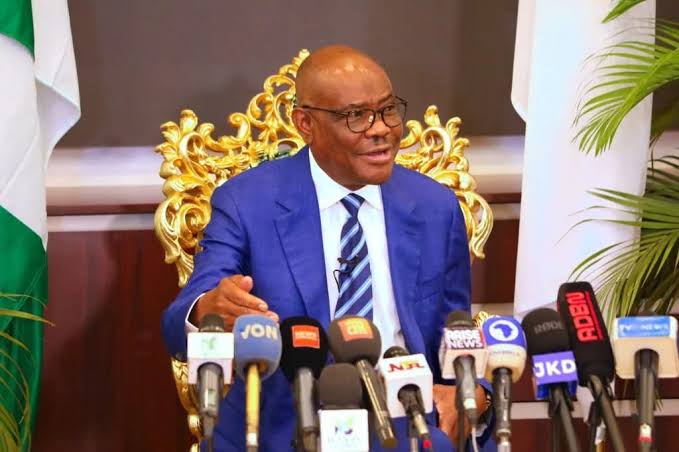
In contemporary Nigerian politics, Minister of Federal Capital Territory, and immediate-past Governor of Rivers State, His Excellency, Nyesom Wike, has introduced a Rainbow Coalition. While he remains the Leader of Peoples Democratic Party in Nigeria, he has, out of his own conviction, been a committed ally of the President and Commander-in-Chief of the Armed Forces of the Federal Republic of Nigeria, Senator Bola Ahmed Tinubu, GCFR, whose Party, All Progressives Congress, APC, is the ruling Party in Nigeria.
According to reports, while Mr Wike is uncompromisingly working hard for the reelection of President Tinubu in 2027, using two different geo-political flanks, Rivers State, and the Federal Capital Territory, Abuja, having successfully made sure that PDP has no Presidential Candidate, he is also unrelenting in his bid to making sure that his Party, PDP, records electoral successes in some States in 2027 National Assembly, Governorship, and Houses of Assembly elections.
The stand of the Minister of Federal Capital Territory has, as it were, generated some controversies and debates. But he remains resolute in his conviction that the most important issue is to make sure Mr President gets reelected in 2027. It could also be that the Governors, Senators and Members of House of Representatives that Mr Wike is working to be elected on the platform of Peoples Democratic Party, PDP, may end up, in the spirit of the Rainbow Coalition, work in the best interest of President Tinubu, and the Nigerian State.
It is certain that the All Progressives Congress is very weak in one or two States in the South-East Region of Nigeria. Given her present rating in such States, the Party may not perform satisfactorily in the 2027 general election in the affected States. It would, therefore, not be out of place if, taking proper and due advantage of the Rainbow Coalition, the Peoples Democratic Party wins in such a State. It will be advantageous to the Presidency under APC, and will also reduce political rancour and discord in the country’s political firmament.
For those who may be attacking the FCT Minister for advocating a Rainbow Coalition, wisdom should have dictated they found out if the Honourable Minister of the Federal Capital Territory could have openly embarked on a gigantic concept of this magnitude without the express knowledge and permission of the President And Commander-in-Chief of the Armed Forces of the Federal Republic of Nigeria.
No doubt, the Rainbow Coalition will also be an avenue to create useful political accommodation for many who may not be conveniently accommodated by other Political Parties because of probable political congestion, avoidable conflicts, moral contradictions or, even, odium and animosity.
However it goes, Wike’s idea of a Rainbow Coalition is not a strange or new concept in Nigeria’s political etymology. The summary of it all is that it is a Political Alliance, and as long as Nigeria is concerned, alliances have been Nigeria’s characteristic political features. They are, as already stated, neither strange nor new. It is, therefore, a welcome and healthy histo-political concept.
Sir Don Ubani is a former Commissioner for Information and Strategy in Abia State, and Publisher of Equity Global Reporters.